





Displacement rises in West Kordofan amid deteriorating security
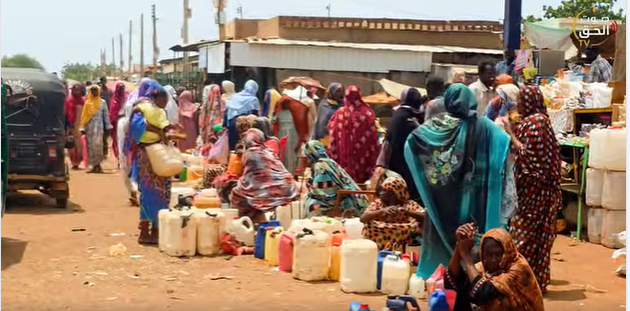
El Fula market in West Kordofan, September 2026 (Fine photo: Supplied)
Internal displacement has increased in West Kordofan over recent days amid deteriorating security and a rise in drone attacks. Hundreds of civilians have been forced to flee their homes in search of safety, as humanitarian conditions worsen and food shortages deepen.
The executive director of the Muzna Charitable Organisation, Howaida Abdelrahman Saleh, has reported an increase in internal displacement in West Kordofan over recent days, driven by the continuing deterioration in security and a rise in drone attacks. Hundreds of civilians have been forced to leave their areas in search of safety, amid worsening humanitarian conditions and food shortages.
In a statement to Radio Dabanga, Howaida said field-monitoring teams were continuously tracking displacement movements and humanitarian conditions across the state. She explained that approximately 400 people fled the town of Abu Zabad in West Kordofan between 15 and 16 November because of escalating insecurity.
The displaced people headed to the localities of Keilak, El Sunut, El Salam, and Lagawa within West Kordofan, amid continuing security concerns and the expansion of areas affected by military operations.
She added that monitoring teams recorded the displacement of a further 930 people from the town of Abu Qulub, in Abu Zabad locality, on 17 November, following an escalation in attacks and bombardments involving explosive barrels and drones. The displaced people moved to different areas within the locality.
She explained that the successive waves of displacement followed a tragic incident in which 17 people, most of them women and children, were reportedly killed in an attack targeting an area that included a football pitch where children were playing. The incident sparked widespread fear and prompted more residents to flee their homes.
Saleh stressed that displacement in West Kordofan was largely taking place within the state, with residents moving from one area to another, sometimes within the same locality, while others were forced to relocate to neighbouring localities in search of safer areas.
190 displaced families in El Fula
In a related development, the executive director of the Muzna Charitable Organisation reported that monitoring teams had recorded the arrival of approximately 190 displaced families in the town of El Fula over the past week. They had settled in two areas of the town.
She explained that this figure did not include families who had sought refuge with relatives or been hosted by other households in residential neighbourhoods. Such cases were difficult to count, meaning the actual number of displaced people was likely to be higher than the figures documented by monitoring teams.
Saleh warned of the rapidly deteriorating humanitarian situation in West Kordofan, saying continued displacement and growing insecurity were exacerbating people’s suffering, particularly amid widespread hunger and mounting basic needs among affected families.
She said the escalation in drone attacks and the widening scope of security threats had made population movements increasingly unstable, forcing families to flee repeatedly from one area to another without adequate guarantees of safety or stability.
She stressed that the recorded displacement figures reflected the severity of the security and humanitarian situation, at a time when increasing numbers of families needed assistance and protection. Field monitoring and registration operations were also facing difficulties, particularly in identifying displaced people staying with relatives in host communities.


 and then